

















Vahe Hakobyan Is a Political Prisoner: Past.am
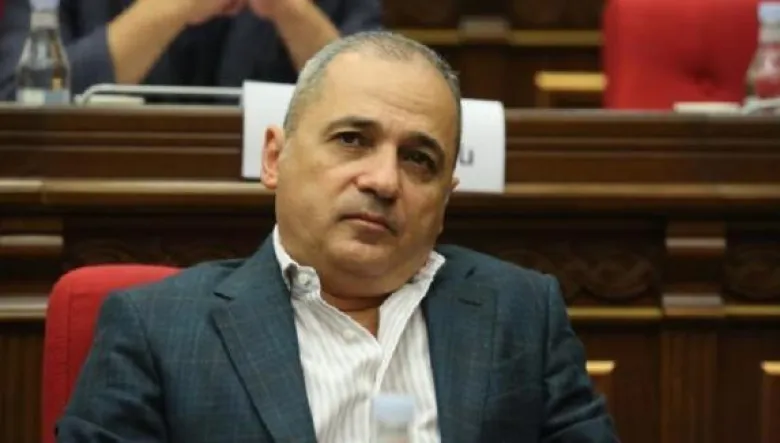
The situation surrounding Vahe Hakobyan has long since moved beyond the bounds of a legal dispute and has turned into a textbook case of political retribution. The criminal prosecution against him does not fit within the logic of a fair trial; rather, it fully corresponds to the definition of a political prisoner—when the law enforcement system is used not to uphold the law, but to serve the political interests of those in power.
Hakobyan’s activity in parliament was marked by sharp criticism and attempts to form a genuine political alternative. It was precisely this factor that turned him into a target. From the moment his political criticism began to have a tangible impact on public discourse, pressure mechanisms were activated—first through an information campaign, and later through criminal cases that are legally fragile but politically convenient.
The substance of the criminal case, the procedural violations, the vagueness of the charges, and the obvious manifestations of selective justice all point to one simple reality: this is not about uncovering a crime. This is about punishing a political position.
When individuals close to the authorities are not held accountable for the same or similar actions, while harsh measures are applied against an opposition figure, this becomes direct evidence of the erosion of the rule of law.
What is happening to Vahe Hakobyan is also a clear message to others: remain silent or face the same fate. This is an attempt to create an atmosphere of fear, aimed at cleansing the political field of undesirable voices. History, however, has repeatedly shown that political prisoners do not weaken the opposition; on the contrary, they become symbols of systemic injustice.
An authority that claims to stand for democracy cannot afford to have political prisoners.
The case of Vahe Hakobyan is a litmus test for Armenia’s justice system. Either the state returns to the legal framework and releases those who have become victims of political persecution, or it openly admits that the courts and investigative bodies serve the political will of a single center.
There is no middle ground.
 Business and mining leader Mark Cutifani to deliver keynote speech at the 3rd Mining Armenia Forum
 New AI-Powered Wildlife Monitoring Camera Installed in Paruyr Sevak with the Support of Ucom
 35 Years of Trust: IDBank Celebrates with Its Customers
 IDBank to Showcase Environmental and Innovative Initiatives at COP17
 Ucom Supported Yerevan Conservation Symposium 2026 as Strategic Partner
 Unibank Receives B++ Sustainability Alignment Rating from Agents for Impact GmbH
 Idram and IDBank Participated in the Opening of My Forest Armenia’s Pavilion at COP17